
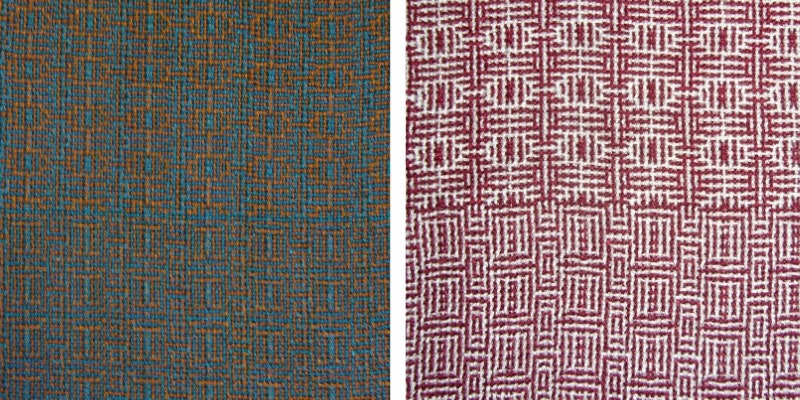
Shadow Weave: A Tale of Two Yarns
Have you ever wondered why two yarns that looks great next to each other on the shelf combine to create a muddy mess? In her latest article, Deb Essen explains how to learn from her mistake and (not) choose colors.
Category
Have you ever wondered why two yarns that looks great next to each other on the shelf combine to create a muddy mess? In her latest article, Deb Essen explains how to learn from her mistake and (not) choose colors.
I would love to be a weaver. I have a loom that I play around with. For some reason I just can't understand weaving terms or how a draft works. Is there a book or info anywhere to make this plain to me?
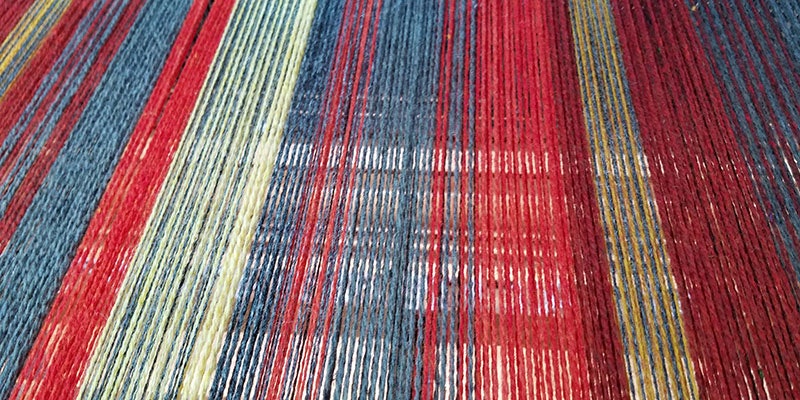
How do you know when it’s time to cut out or unweave? Here are some of the signs I’ve come to recognize. For some reason, I am not reluctant to cut out or unweave due to a threading or treadling error, but I struggle with an error in judgment or design.
I'm trying to understand weaving copyright. Can I sell pieces I wove based on instructions from Handwoven? How do I know a piece is truly "original?"
I recently bought an old counterbalance loom. I thought one of the advantages of the counterbalance design was that they tend to give a larger shed, but I'm weaving my first project on it, and the shed seems fairly small.
I weave with a jack-type loom (rising shed). I have never found a good description of the difference between counterbalance looms, countermarch looms and a sinking-shed lack loom (Louet's David loom is described as a "sinking shed jack loom").
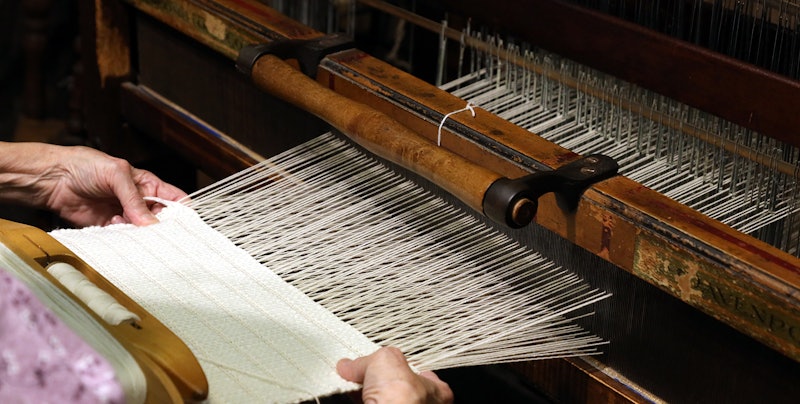
I say I love weaving, but there are a few things about it I’m not crazy about.
Here at the Weavers' School, we put on warps (mostly on Baby Wolfs) that are about 30 yd long. We could probably fit close to 40 yd warp length on these looms.
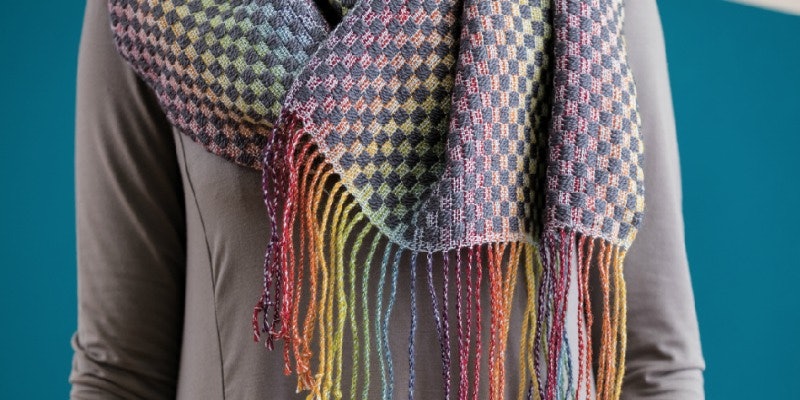
Rainbows are wonderful. Dorothy Gale, Kermit the Frog, and Israel “Iz” Kamakawiwo‘ole, have all sang about these magical natural phenomena. When I was a child, seeing rainbows was a rare, wonderful experience. My friends and I would trek out as far
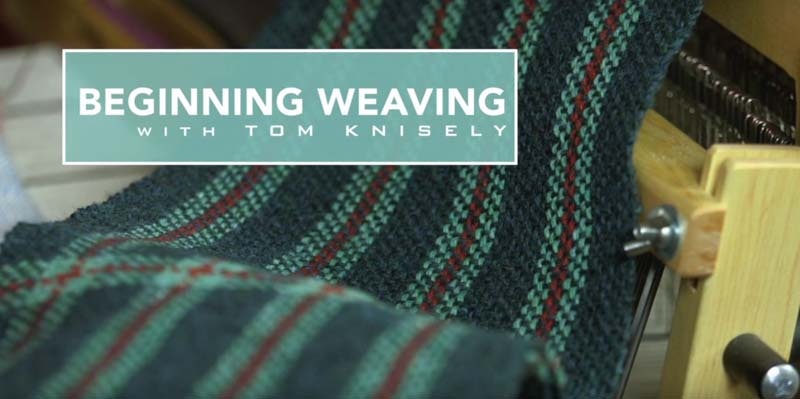
In his video, Tom teaches you everything you need to get started, from the basics of project planning and warping through finishing your cloth, and his friendly teaching style makes it clear and simple.
Usually, overshot is woven with a warp and tabby weft of the same size and a pattern weft that is two to three times heavier/thicker than the warp and tabby weft.
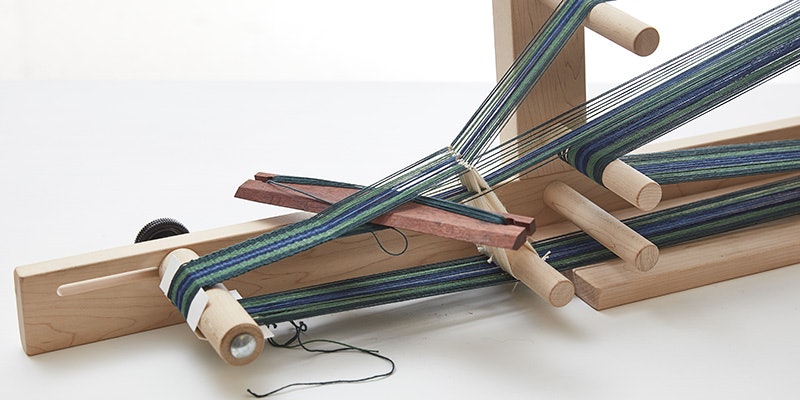
For the first 9 months of my time as editor of Handwoven, I passed an inkle loom every day on the way to my desk. It really bugged me. Someone had warped it with icky, thin yellow yarn and woven about 2 inches with the same yarn.