
Loading the latest stories…
Sometimes I just want to play “what if” with an unusual weft. This time a bunch of plastic strips fit the bill.
Susan E. Horton3 min read
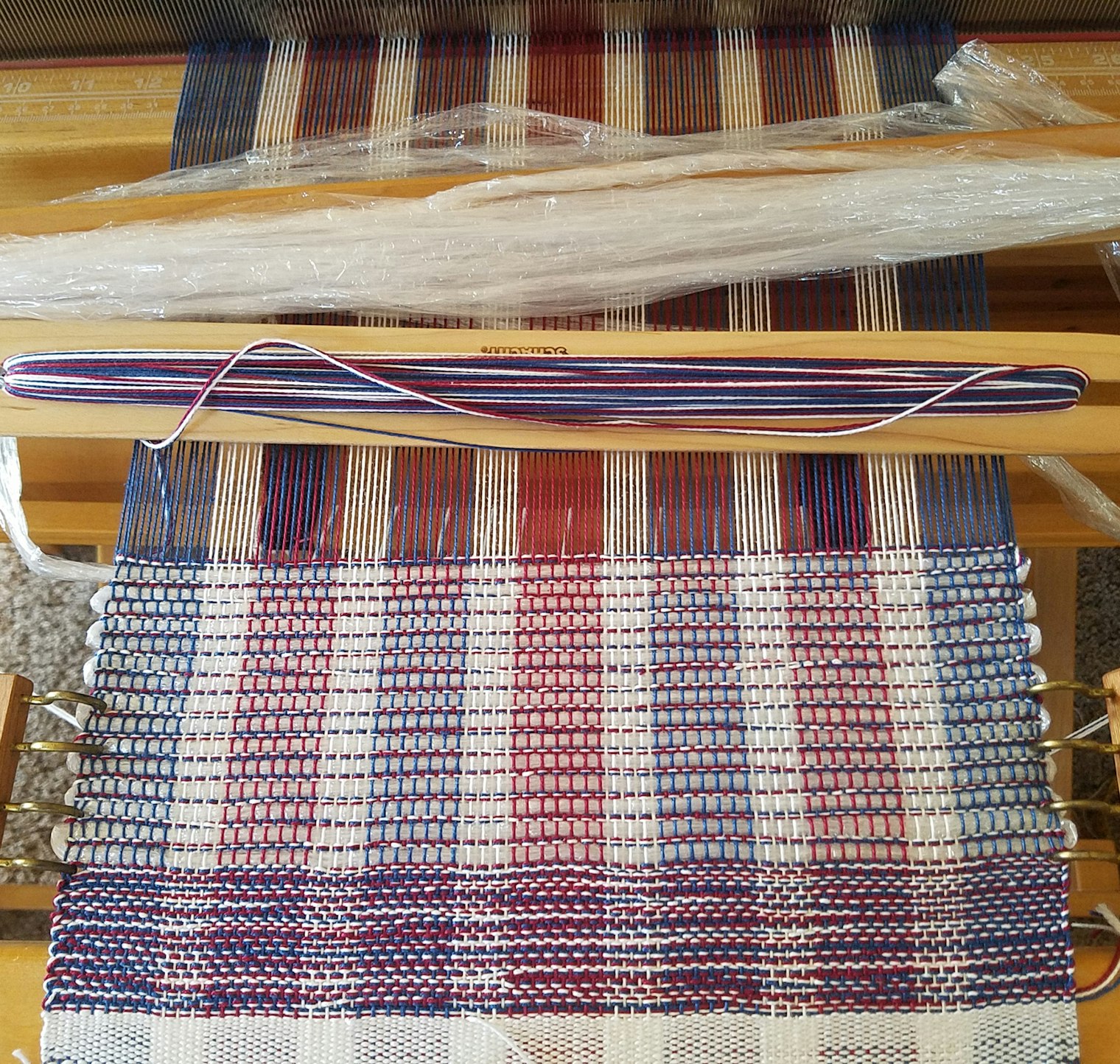
I have no recollection of what was in the box, but a year or so ago, an item we received at the house was wrapped in long strips of what looked like plastic wrap. It was intriguing to me as a possible weft, so I wound up the strips and added them to my stash. They sat there taking up space until recently when I was finishing up a shawl warp on my rigid-heddle loom and threw in a few picks of the plastic. I wove a few inches with and without alternating thin weft picks, cut it off, wet-finished it in cold water, shook it out, and then laid it flat to dry. It was by no means beautiful, but there was something there that I liked.
 My sample was nothing to look at, but it told me that the plastic might work as weft.
This past weekend with nothing on a loom and being in the mood to weave, I decided to weave a runner using the plastic strips as weft. I have a set of 8 blue and white placemats that I wove last year and decided to add red to the colorway to create a runner that would work for national-holiday barbeques and French Bastille day celebrations. A post by Madelyn van der Hoogt gave me the idea of weaving a runner that would fit on the table with the placemats in place rather than merely one that worked without placemats. I measured and determined a hemmed runner about 12" wide and 48" long would be perfect and would fit on both my inside and outside dining tables.
By playing around with stripes in Fiberworks, I designed a pattern that works a little bit like rep in that in 4 of the red and blue stripes you can change which color is on top by eliminating a thin weft pick. I warped a little more than 3 yards, threaded a straight 4-shaft draw, and within the day had my warp on the loom. Although I had originally woven with the plastic on a rigid-heddle loom, I was working on my floor loom for a firmer beat. My warp was 5/2 cotton and my epi was 12, a wide sett for 5/2 cotton because I wanted the plastic to show.
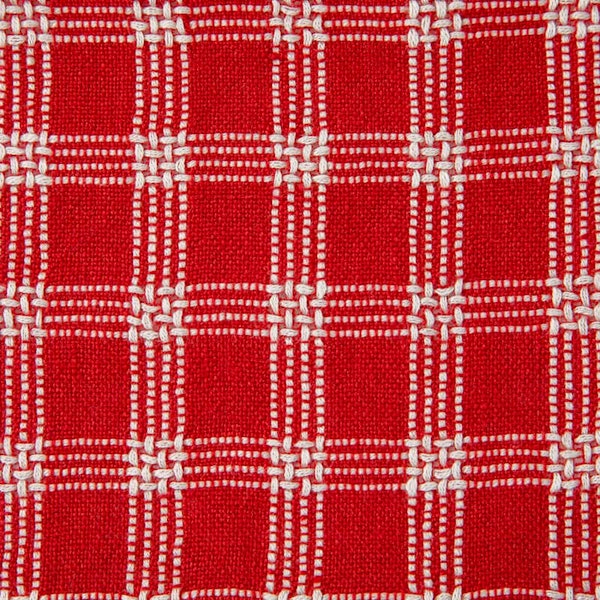
 Red, white, and blue 5/2 cotton for the warp and thin weft and the plastic strips for the thick weft
The next day I planned to weave the runner. Up to this point, all had gone very smoothly, but it turned out that when I wove with the plastic on my rigid-heddle loom, I didn’t take the edges into account. The plastic is somewhat springy and has a tendency to pull in the edges if you don’t twist it and place it carefully. At the wide sett, I also found the different yarns I was trying in the header were pulling in too much, causing the runner to look almost cup-shaped as it grew from the narrow header width to the main runner width. I wove header after header and wove and unwove picks of plastic for most of the day.
Finally I wondered if a temple would help. I dug one out, and after a few missteps, I was able to weave a header using 3 strands of 5/2 cotton that didn’t pull in too much and to get the plastic section of my runner started. I have to place the temple carefully so as to not damage the plastic, but it seems to be working, as I am now in the early stages of loving a project I’m working on. It turned out not to be a project I could weave in a weekend, but it feels like it will be one I’ll be happy with. Stay tuned! I’ll let you know how it works out!
Weave well,
Susan
More from Handwoven
From the Library







Comments
No comments yet — be the first to share your thoughts.
Sign in to join the conversation — commenting is for signed-in members.