
Loading the latest stories…
Worsted has many meanings, and I was surprised by a few!
Susan E. Horton3 min read
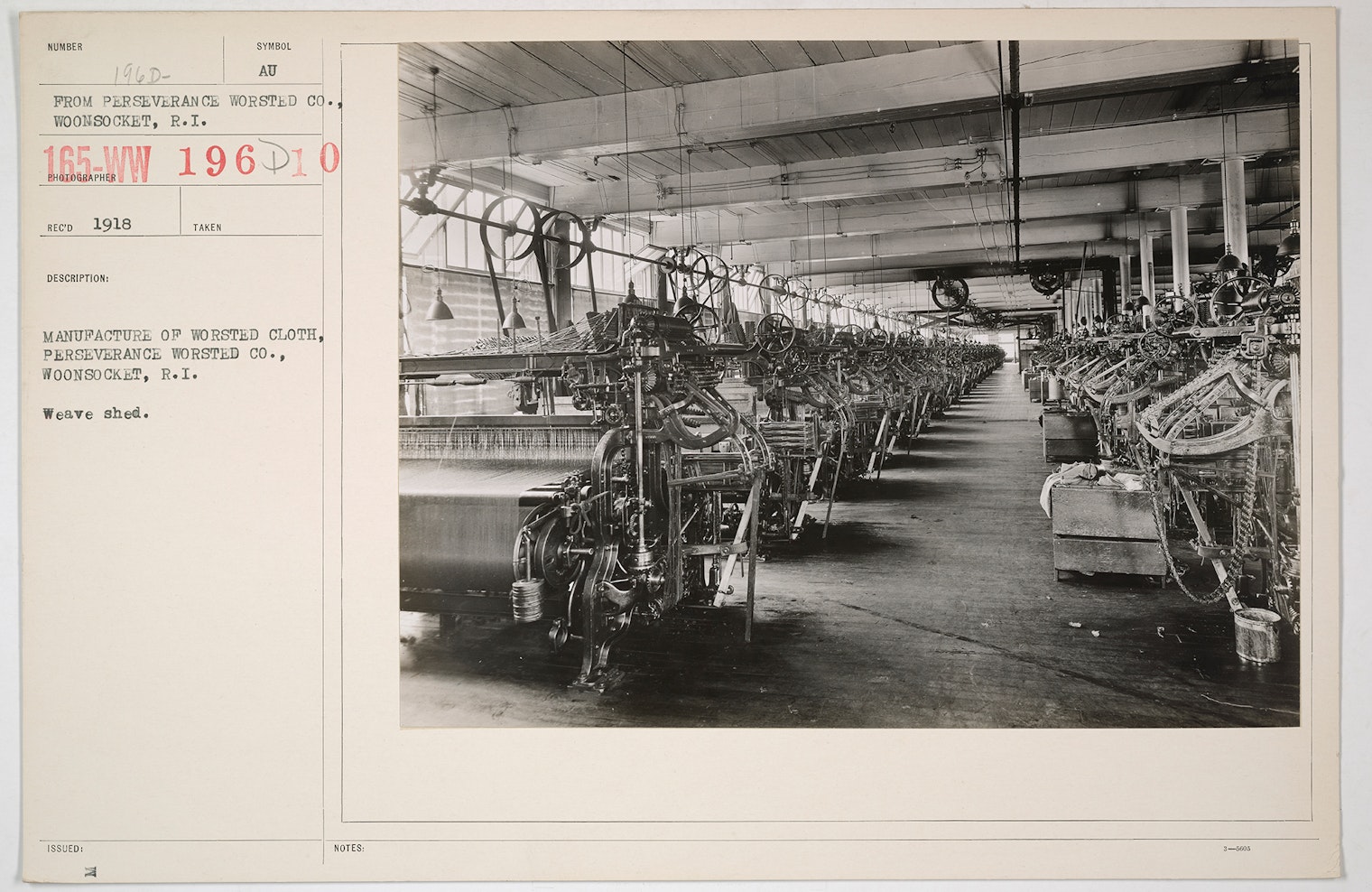
Rarely do my professional and weaving life intersect with my everyday life, with perhaps the sadly common need to explain the difference between weaving and knitting to nonfiber people. (“See your jeans, that is weaving, a twill to be exact. See your T-shirt? That is knit.”) One time I got to recite the legend of the Chinese empress discovering silk when a silkworm cocoon unspooled in her teacup, but really the instances are rare enough that I remember them.
Here is one that surprised me. We had a few couples for dinner one night. Two of the couples had lived for extended periods of time overseas, and they were talking about having clothes made for them out of “worsted.” As a knitter and weaver, I was perplexed. Worsted was already a little confusing as a word; for knitting and weaving it meant a medium-sized yarn that I might use to knit a sweater or hat or even put on my loom for a blanket or shawl. On the other hand, I knew it also referred to a type of yarn in which the wool fibers are long, smooth, and parallel. The opposite, so to speak, of a worsted yarn is a woolen yarn which basically means shorter fibers and fibers that aren’t so straight.
 I'm pretty sure my friends weren't wearing dresses as fancy as this deep purple worsted wool dress circa 1892. Courtesy of the Missouri Historical Society, St. Louis
When we talked about it further, I realized that our friends were referring to a very thin wool fabric. They said the worsted fabric was so thin that although it was wool, it could be used for men’s summer suits. After that night, I looked it up and learned that one of the definitions of worsted is indeed a thin wool fabric. The fabric is woven using thin worsted-style wool and is usually twill or plain weave. For summer-weight worsted, also called tropical-weight, the fabric is woven loosely so that air can pass through it. Its name comes from the town in England where it was originally woven in the Middle Ages, Worstead.
 Although clearly not the blue pair Mary Queen of Scots was sporting on the scaffold, these are a great example of worsted stockings! This file was contributed to Wikimedia Commons by Conner Prairie, Indiana’s Living History Museum, as part of a cooperation project. The donation was facilitated by the Digital Public Library of America, via its partner Indiana Memory.
I shared all of this at a team meeting and was again surprised when Kate Larson, the editor of Spin Off, told the group yet another definition of worsted. According to Kate, "worset" or worsted stockings were once considered a sign of wealth and worn by folks as a fashion statement. She shared a page with me from Textile History and Economic History: Essays in Honour of Miss Julia de Lacy Mann. In the chapter titled “The Fantastical Folly of Fashion” that Kate was remembering, there is a description of Mary Queen of Scots wearing blue worsted stockings on the scaffold.
So there you go, a yarn size, a yarn type, a woven fabric, and fine knitted socks that even royalty wanted to wear... not to mention the name of a town. It may seem a little confusing, but it makes for a good story ... should the term worsted ever come up in your everyday life.
Weave well,
Susan
More from Handwoven
 Win Big in the 2025 Great Holiday Giveaway!With 17 prizes valued at over $1,600, weavers and fiber lovers could win big this holiday season. Handwoven Editors · October 10, 2025
 Going on VacationIt’s time to get ready for warm-weather adventures with the help of the Summer 2025 issue. Lynn Rognsvoog · May 12, 2025
 Working Out a Weaving ObsessionDesigning and weaving the same structure multiple times may be the best way to fully understand it.Susan E. Horton · May 8, 2025
 Handwoven Summer 2025 Web Extras and Lift Plans Find lift plans for the projects in this issue, plus links for web extras and subscriber-exclusive downloads. Handwoven Editors · May 7, 2025
 Inspired by an Ad—and Now Woven in Richer ColorsTake a fresh look at Eileen Lee’s Mosaic Tiles Scarf designEileen Lee · May 5, 2025
 Rigid-Heddle Weaving Is Real WeavingA bit of experience was all it took to change my mind about these so-called “little looms.”Susan E. Horton · April 30, 2025
 Meet the Sweet Linen and Lace Towels—and Then Learn More About Lace Towels that make drying dishes a pleasure, plus an eBook and a newly updated video course.Handwoven Editors · April 28, 2025
 Madelyn Asks: What Do You Do With Loom Waste?From felting to spinning to weaving (of course!)—a look at how readers use their scraps and thrumsMadelyn van der Hoogt · April 24, 2025
 Take a Deep Dive into Huck LaceYou‘ll find towels, napkins, scarves, tablecloths, and more in our eBook full of tempting projectsHandwoven Editors · April 21, 2025
 Call for Submissions: Spring 2026—Butterflies and Beautiful BugsThis issue focuses on colors, patterns, and shimmering effects drawn from tiny creatures in the natural world.Lynn Rognsvoog · April 17, 2025
From the Library




Comments
No comments yet — be the first to share your thoughts.
Sign in to join the conversation — commenting is for signed-in members.