
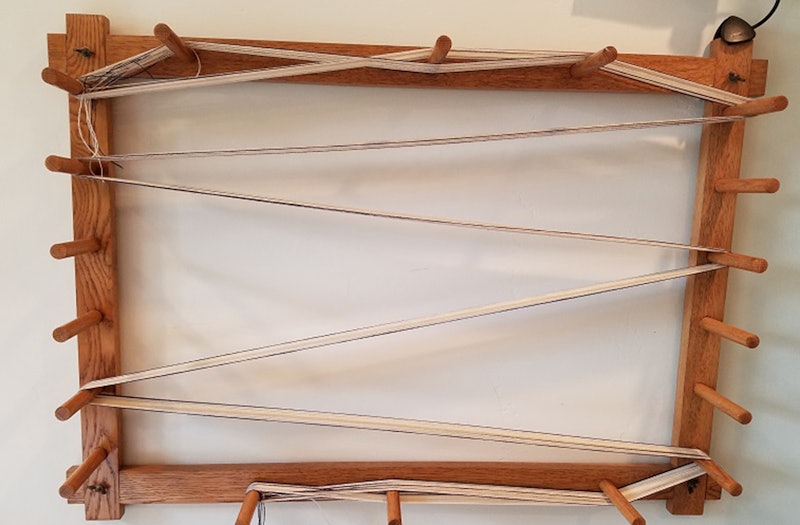
Pay Attention When Warping a Loom
I realize that many of my problems come from being distracted. In this list most, problems are due to not being careful while winding, warping, and dressing my loom.
Category
I realize that many of my problems come from being distracted. In this list most, problems are due to not being careful while winding, warping, and dressing my loom.

Broken warp threads at the edges aren't usually a problem for me. When they do occur, I understand that the breakage is probably due to draw-in.

Weaving master Madelyn answers a question about a master yarn chart sett and warping a loom in this helpful weaving article.

Is there a reason for warping an overshot rug front to back, rather than back-to-front warping? How do you decide how to warp a loom for a given project?

When you are experiencing more than the occasional broken warp thread, first look at where the warp threads are breaking. Usually, you can then use strategies to prevent or minimize breakage.
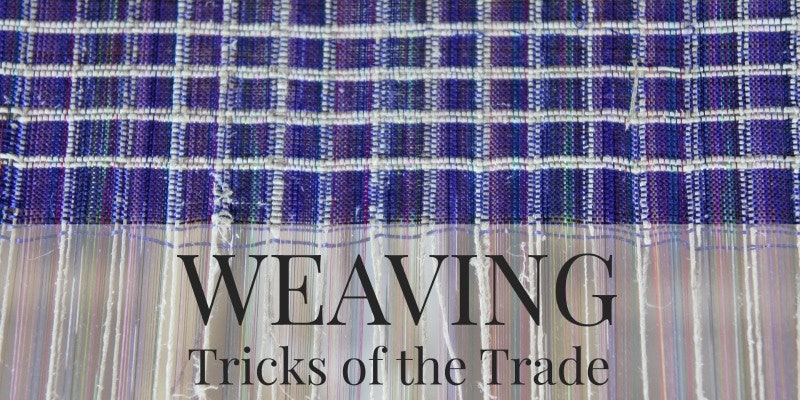
But I’ve gotten a lot of pleasure from making yarn this way. However you think about spinning and weaving, here is this weaver's approach to spinning:

When it comes to weaving techniques, pick your battles carefully, and I believe you will get more satisfaction from the process.

I carefully wound a 13-yd warp of 8/2 natural cotton and took it off the warping board and then realized that I forgot to tie the cross. What should I do?

Why would a warp get tighter on one side of the loom and looser on the other?

Probably having multiple reeds would be preferable, however, reeds are expensive. If you could have only a few reeds, what reed sizes would you suggest?

How do you rethread a warp that is already on your loom? Part of the answer is preserving the cross.

I am wondering if it wouldn't be possible to have the Master Yarn Chart (which already reports meters per kilogram) with the sett ranges given in metric numbers (ends per centimeter)?