
Latest
Part Two: The Hows of Sampling
Deb explains the value of sampling at the loom to create the fabric you desire.
Category
Deb explains the value of sampling at the loom to create the fabric you desire.
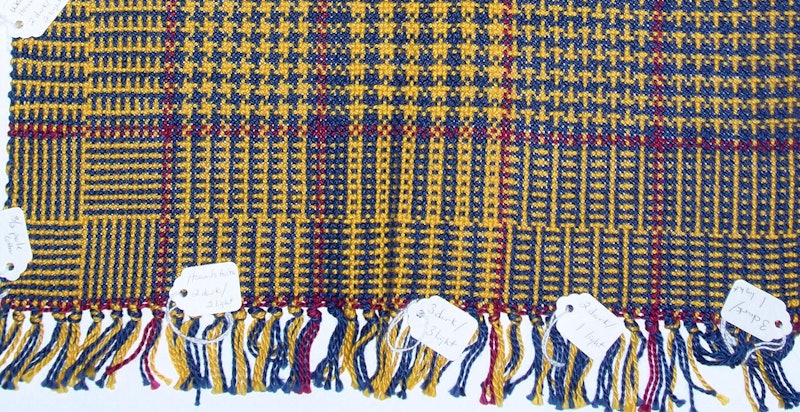
Deb explains the value of sampling at the loom to create the fabric you desire.

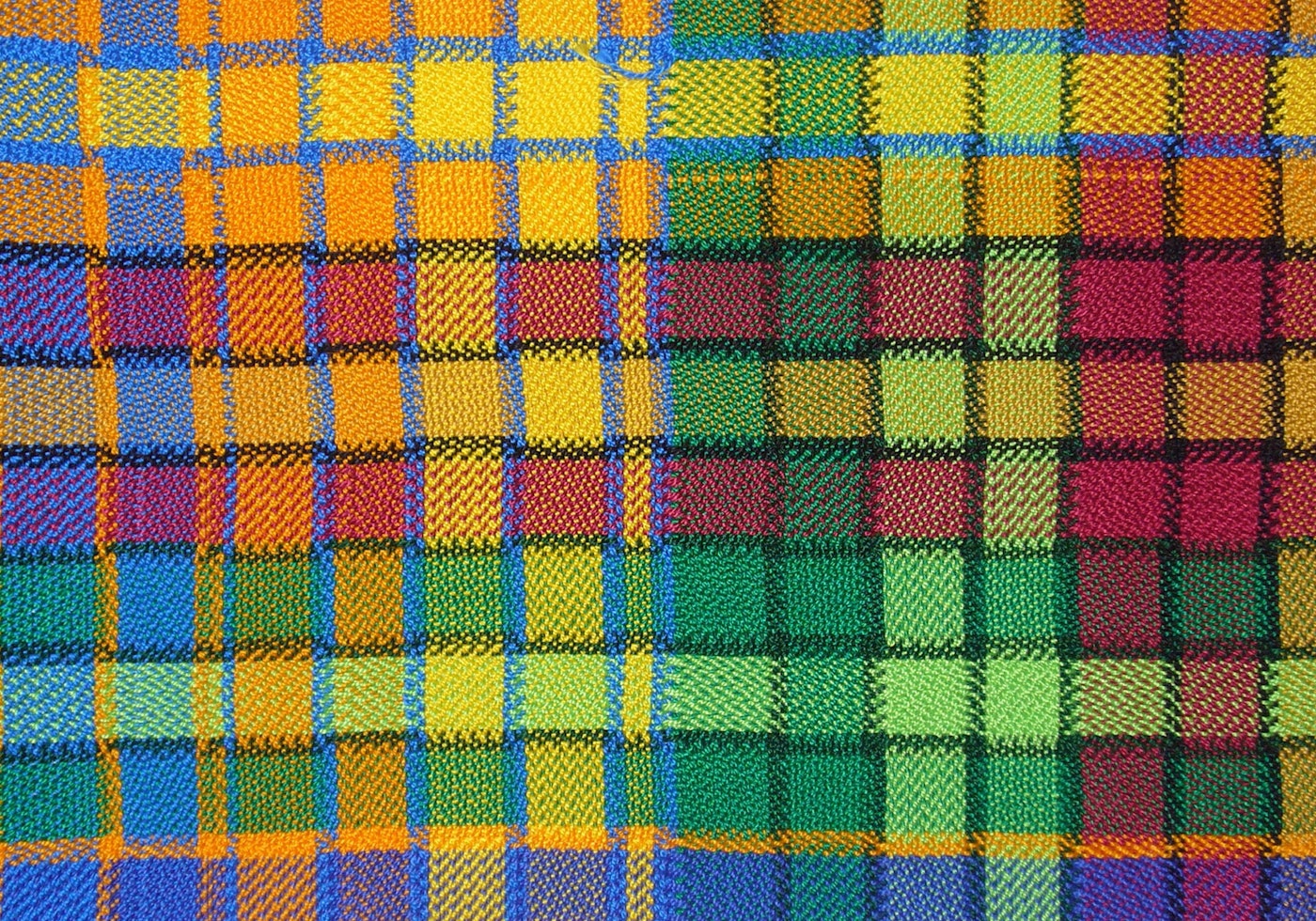
Many weavers have a love/hate relationship with sampling. In her latest video, Color in Weaving, Deb Essen explains why she loves sampling!
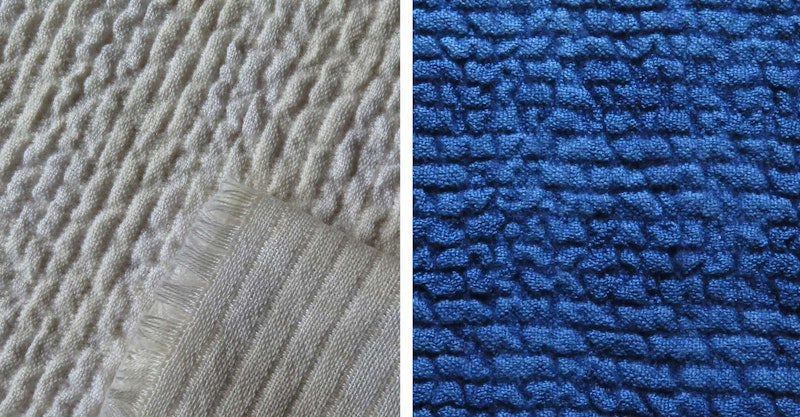
Structurally, distortion and deflection occur in cloth if there are areas of plain weave adjacent to areas of floating ends and/or picks. Weft Bedford cord falls into that category.
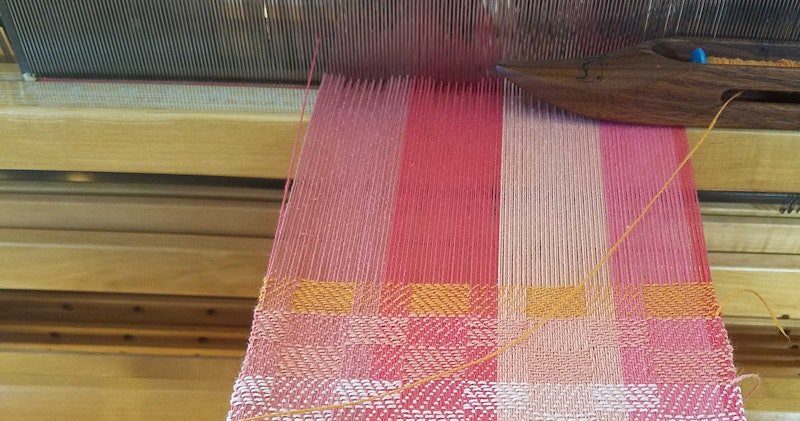
I’ve always sampled with a project in mind, but maybe I should be sampling based on the yarn itself.
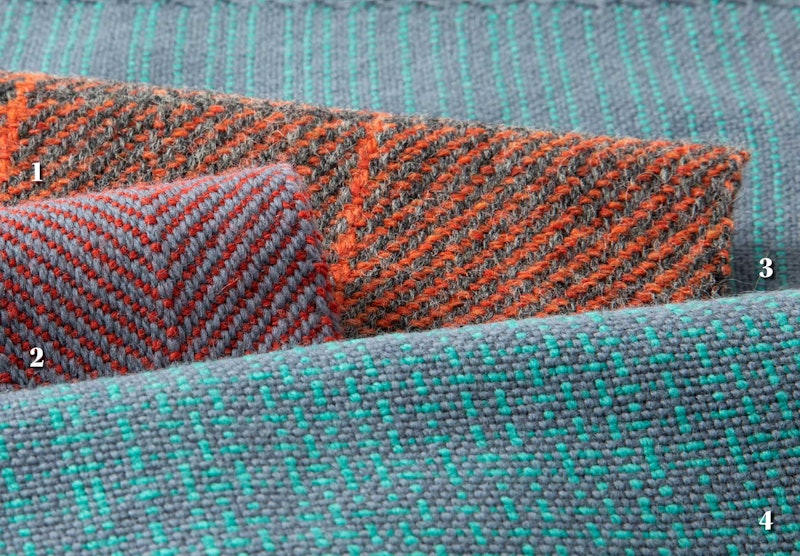
In her swatch collection Sharon Alderman explores fabrics that would fit perfectly in any Mid-Century Modern Home.

Madelyn explains her sampling process—it might surprise you!
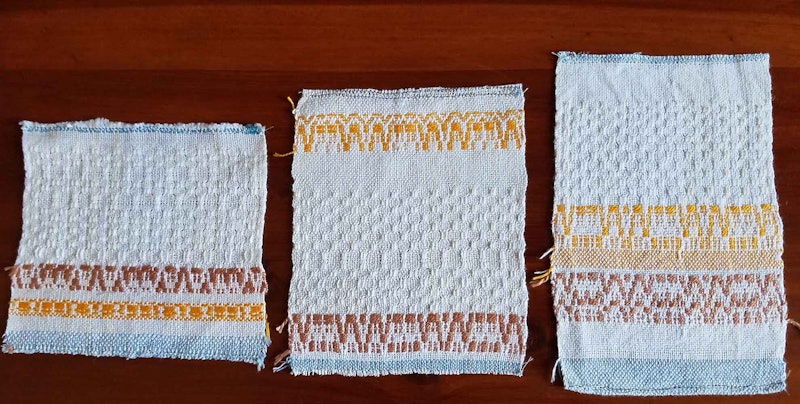
With my sampling complete, it was time to calculate warp width and length for my Sweet Orange Huck Towels
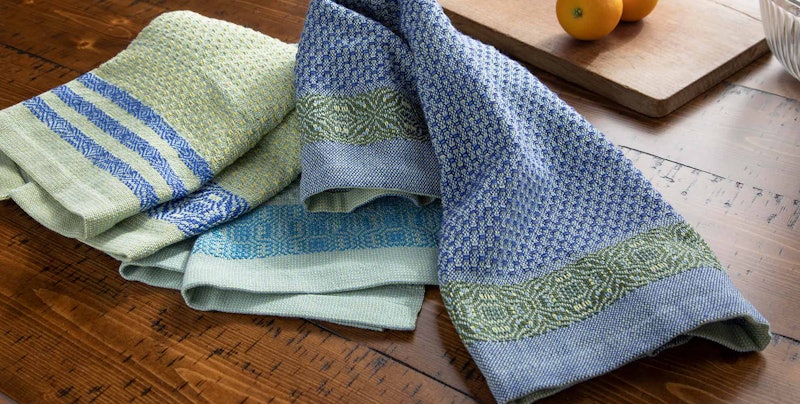
I thought I was sampling for color, but to my surprise, it ended up being a sample for sett.
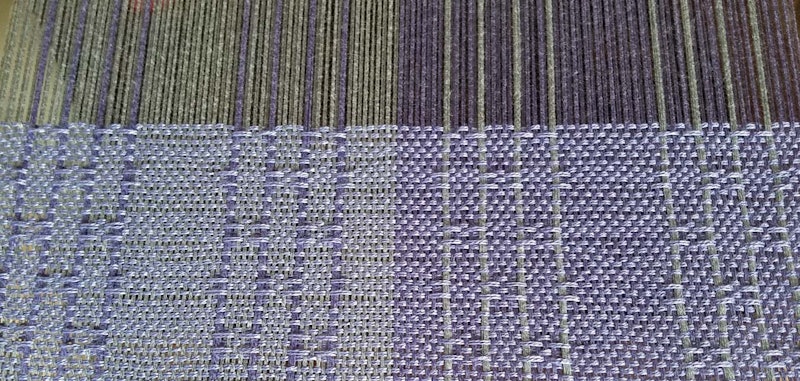
Taking a project from design through sampling and then completion is slower when you weave only on the weekends.
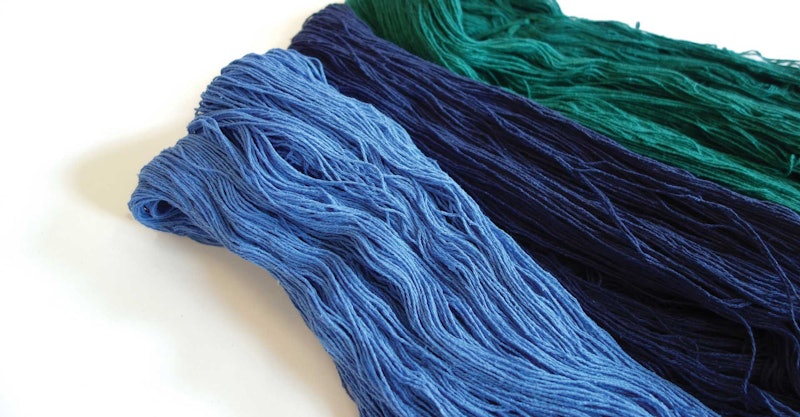
Long, lustrous fibers define the usual description of silk. Defying tradition, GIST Yarn & Fiber’s Italian Silk Noil travels a different road to warm, soft, textured fabrics.
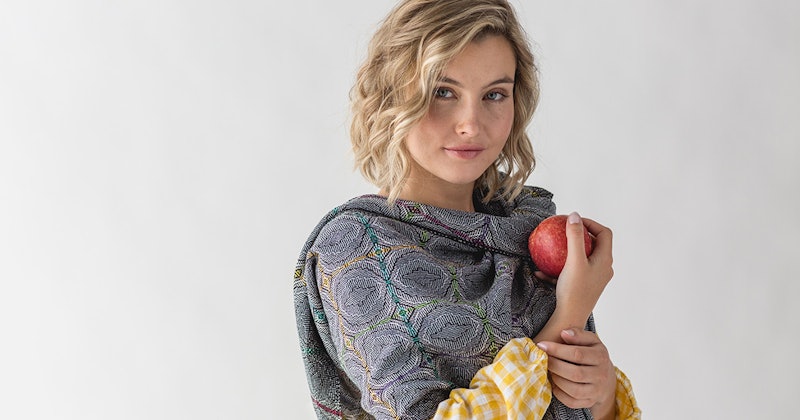
This weekend, I threaded 430 ends of 20/2 cotton on my loom in 4 shades of gray from Lunatic Fringe’s Tubular Spectrum. It’s an easy threading of plain weave with some crammed ends of 10/2 cotton to create ribs in the fabric.
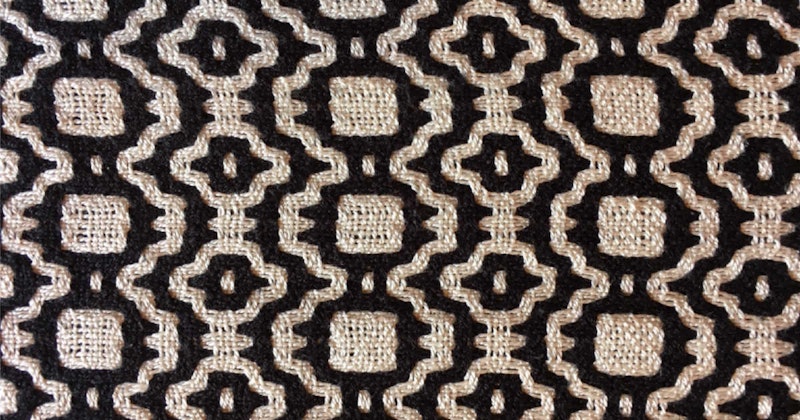
I remember the first time I saw deflected doubleweave—it was a set of scarves woven by Madelyn and featured in the January/February 2007 issue of Handwoven.