
Loading the latest stories…
Using the right shuttle will make your weaving go smoother. In this first entry in our shuttle series, Liz Moncrief covers 4 of the simplest shuttles available.
Liz Moncrief4 min read
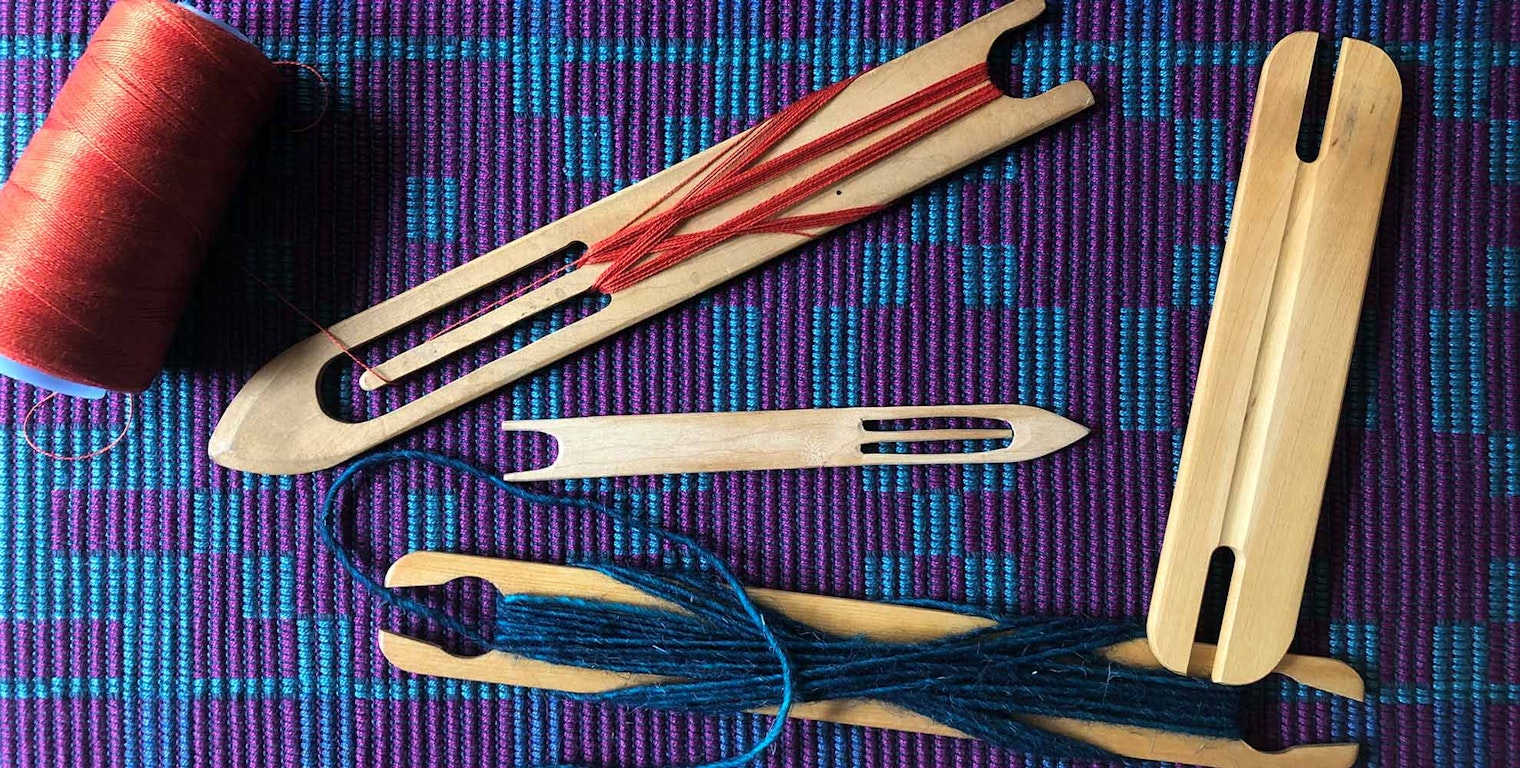
I recently asked Liz Moncrief, who knows a lot about weaving equipment, if she would be interested in writing a few posts that would describe the many shuttles available, the types of projects they are best suited for, and how to load them. We tossed around a few ideas, and she came up with a proposal for 4 posts that describe the main types of weaving shuttles. Who knows, there may be more than 4 posts needed, but we'll start there. —Susan
One item that garners a lot of discussion among weavers, both new and seasoned, is the weaving shuttle. There are many makes and models available, and most are tailored to specific types of weaving. With this series, I review the main categories of shuttles and offer tips on how best to load and use them. In this post, I start with the simplest shuttles available; I’ll progress to the more advanced types in future posts.
The simplest weaving shuttle is a flat STICK SHUTTLE. You can pick up a stick shuttle anywhere that weaving supplies are sold, or you can easily carve your own. Stick shuttles are generally used on table looms (including rigid-heddle looms) with narrow sheds. The shuttle doesn’t glide across the warp on a shuttle race but instead is passed from the right to left hand and back again. Sliding the shuttle across the warp causes friction on the warp and is ineffective.
Wind a flat stick shuttle with a figure eight using the arms or notches from the top right to the bottom left. When it starts to get too full, switch to the top left to the bottom right. This will build the bulk of your weft yarn on one side of the stick. If you’re really going for yardage, you can turn the stick over and do the same on the other side, but you risk building a lot of bulk on the shuttle, which may hinder the pass through the shed.
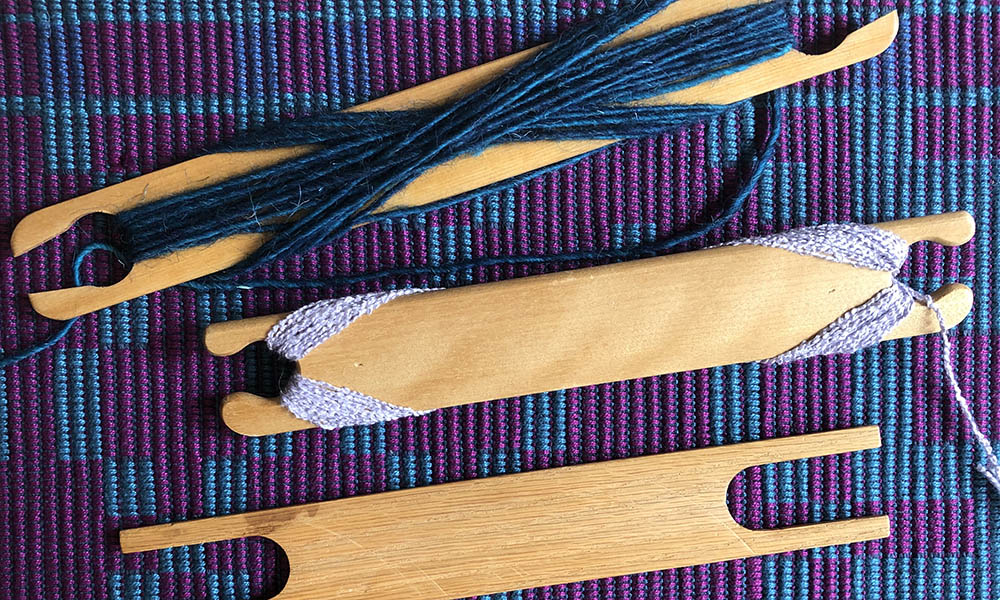
Stick shuttles vary in size and shape, but they all are useful for specific tasks.
Another flat shuttle is the BELT OR BAND SHUTTLE, which is usually no more than 6–10 inches long and made for use on an inkle or band loom. Most belt shuttles have a knife edge on one side, designed for packing in the weft, and a recessed center trough to enable it to carry more weft. Because of this recessed area, it is best to simply wind the weft yarn around from front to back and to build up the yarn on both sides. Despite its small size, a belt or band shuttle can hold a good amount of weft.

Band shuttles often have a recessed middle to hold more weft and a knife edge for packing in weft on the loom.
The NETTING SHUTTLE has been used for centuries in making and repairing fishing nets, but weavers find it useful for hand-manipulation techniques such as Spanish medallions or Brook’s Bouquet designs. It is sleek and passes easily between warp threads. Netting shuttles can also be used in place of butterflies in tapestry weaving and for adding short lengths of weft of a special color or designer yarn.
Next in my line-up is the RAG SHUTTLE, which is designed to hold a flat strip of fabric for rag rugs or other similar projects. This shuttle is usually pretty beefy and requires the large shed found on counterbalance and countermarch looms. Wind your rag strips around and around the shuttle keeping them flat. Although the rag strips will be compressed, starting out with a flat strip makes it easier to maintain the colored fabric surface in the finished piece.

Wind your rag shuttles with the rags flat for best results.
Many weavers want to avoid loading more weft on a shuttle than they need in their woven piece. On the other hand, you may want to know whether you have enough weft to complete a piece without having an unnecessary join. Here’s my easy method for figuring out how much weft to wind. It’s easy to do and fairly accurate.
In my next post in this series, I’ll discuss rug and ski shuttles, the best methods for winding them, and the type of weaving that you use them for. After that, I’ll look at boats, double-boats, open- and closed-bottom, and end-feed shuttles.
In future posts, I’ll also cover finish and maintenance and what you can do to make your shuttles the most efficient for your weaving. There are so many considerations, especially when you realize that you may be passing this shuttle many thousands of times in a woven piece. So let’s find the proper tool for you.
Originally published August 28, 2020; updated April 15, 2024.
More from Handwoven
 How to Weave Other Side UpWeaving with the reverse side up by accident? The solution is in your loom type—and your tie-up.Handwoven Editors · August 5, 2026
 Books Off the Beaten Path: The Yarn Barn of Kansas List of Hidden GemsBook Club Podcast: What lesser-known treasures do Yarn Barn fiber artists love to share? Susan and Melissa share some of their favorites in weaving, spinning, and knitting. Liz Gipson drops by to talk about one of her books that Susan and Melissa adore.July 18, 2026
 Selvedge Series, Part 3: Add Commercial or Handmade Trims + Free VideoTwill tape, braids, and even fancy rickrack step up in this video tip from Spice Up Your Selvedges.Sara Bixler · July 15, 2026
 Books in Brief: Bandweaving, Tapestry, Artists at Work, and Wild BasketsFour new books with ideas to inspire handweavers.Handwoven Editors · July 13, 2026
 Understanding Brackets and RepeatsDon’t let yourself be overwhelmed by all the information that sits above a threading.Handwoven Editors · July 10, 2026
 How to Twist FringeTransform warp threads into a decorative feature with this finishing technique.Handwoven Editors · July 10, 2026
 Simple HemstitchingHemstitching creates a neat, secure edge that helps prevent your weaving from unraveling.Handwoven Editors · July 10, 2026
 Ladder and Trellis HemstitchingOnce you’ve mastered the basic hemstitch, try these decorative variations for an elegant edge.Handwoven Editors · July 10, 2026
 On Vacation? Feel Like Weaving? Find a Good Stick!Start with a walk in the woods, add a handful of thrums, and you’ll have a project to fill a lazy afternoon.Lynn Rognsvoog · July 8, 2026
 All Sorts of Warp Ends: Single, Doubled, and WorkingWhat do those words mean when it comes to heddles—and to sett?Handwoven Editors · July 6, 2026
From the Library




Comments
No comments yet — be the first to share your thoughts.
Sign in to join the conversation — commenting is for signed-in members.