
Loading the latest stories…
It made me think about some of the weaving opinions you hear about today that I believe don’t actually hold up to scrutiny.
Susan E. Horton2 min read
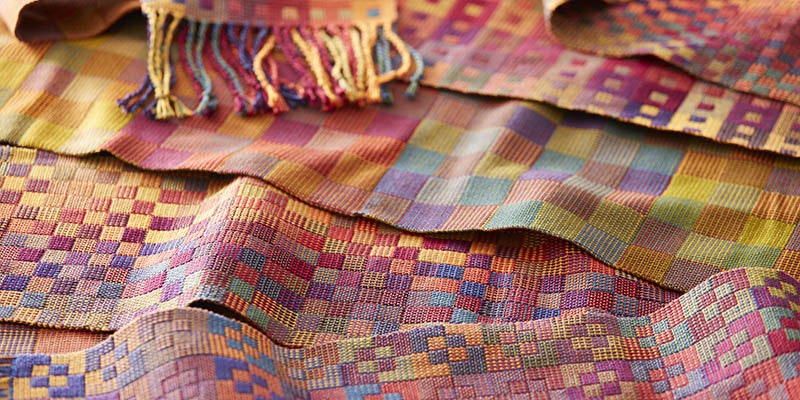
I recently picked up a used weaving book published in 1979, Weaving Techniques for the Multiple-Harness Loom by Pierre Ryall. The book is no longer in print. I agreed with the blurb on the back cover that "Most available weaving books are devoted to American and Scandinavian styles and techniques" and was interested in how weaving might have followed a different path in France. Pierre Ryall was a well-known French weaver in the 1970s, and (according to the back cover) had been weaving for more than 30 years. He was the author of Le Tissage, wrote a column for the French craft magazine L’Atelier, and was the French representative for the Handweavers Guild of America.

Although I may not agree with everything Mr. Ryall says, his book is interesting. Photo credit: Susan E. Horton
I found the book interesting and the writing engaging: "When you get a loom, you get a good friend in the bargain." Many of the drafts look familiar, but there are some that intrigue me enough to want to weave them in future projects. I did have to stop and reread the following line in the Double Face Weave (doubleweave) chapter: "It’s an interesting technique but quickly becomes tiresome." I believe Mr. Ryall was working with graph paper, and if he had had access to weaving software, he might have had a different opinion. Check out Jennifer Moore’s Doubleweave book, which is based almost solely on 4-shaft projects, and I think you will agree with me.
It made me think about some of the weaving opinions you hear about today that I believe don’t actually hold up to scrutiny:
If he is still alive today, I believe Pierre Ryall might have a different opinion about doubleweave. I plan on reflecting on some of my own opinions about weaving and then pushing myself to see if they are justified. I urge you to do the same and see where weaving can take you.
Tissez bien,
Susan
More from Handwoven
From the Library






Comments
No comments yet — be the first to share your thoughts.
Sign in to join the conversation — commenting is for signed-in members.