
Loading the latest stories…
Applying the same standards to the finishing as you did to everything else about a project sometimes takes more time than the weaving.
Susan E. Horton2 min read
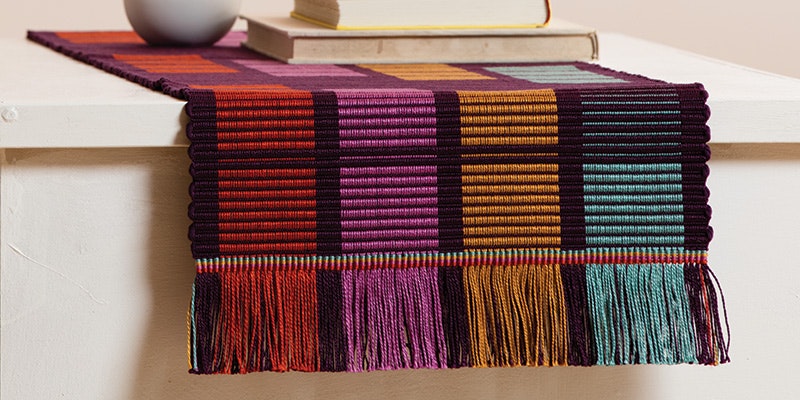
If you have been weaving for a while, you know that finishing a handwoven project well is as important as the design and actual weaving. Applying the same standards to the finishing as you did to everything else about a project sometimes takes more time than the weaving.
For a professional look on scarves and shawls, I twist the fringe. For table linens with fringe, I hemstitch on the loom and then trim the fringe. I handwash fringed projects, but particularly when the fringe isn't twisted because the yarn will deteriorate with vigorous washing. I alternate between hand-hemming handwoven items such as towels and hemming them on the sewing machine, although lately I am leaning more towards the hand-hemmed look.

Color Gradation Towels by Susan E. Horton, Handwoven March/April 2017. Hemmed by machine but maybe hemmed by hand would have been better? Photo Credit: George Boe
A lot of people like fringe on handwoven rugs, but in my house, fringe either gets caught in the vacuum or chewed on by pets, so I finish the ends with hems or twine the warp and then tuck the ends back into the rug.
Over the years, I've made some mistakes and hopefully learned some lessons about weaving and finishing. Here are a few gems:
Many weavers just knot the ends up close to the weaving and trim. If that is your method, I encourage you to try different finishing techniques. The correct finishing technique can make an ordinary weaving into extraordinary, and a wonderful weaving into amazing.
Weave well, Susan
More from Handwoven
From the Library






Comments
No comments yet — be the first to share your thoughts.
Sign in to join the conversation — commenting is for signed-in members.