
Loading the latest stories…
Here are directions for making a manual shaft-switching device for weaving weft-faced rugs.
Tom Knisely6 min read
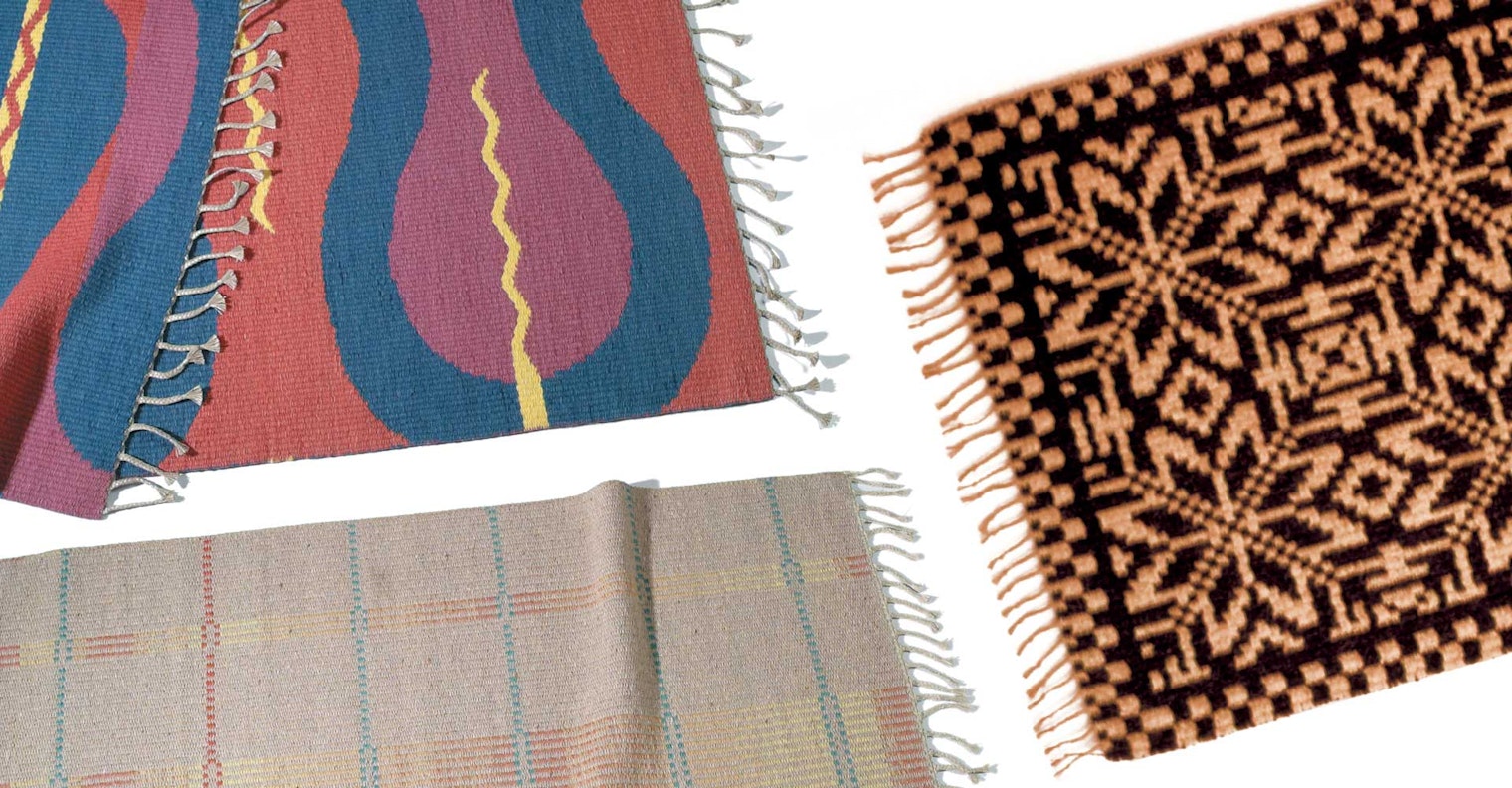
There are very few new ideas in the field of textiles. Let’s face it; whatever we dream up, most likely someone else in the last twelve thousand years has probably woven it somewhere sometime. But the combination of Peter Collingwood’s pure genius and the need to weave patterned rugs quickly enough to be saleble led him to develop the technique he named shaft-switching. In 1968, he introduced the weaving world to shaft-switching in The Techniques of Rug Weaving (see Resources below).
In the 1980s, Harrisville Designs approached Collingwood and asked for his help in developing a new rug loom that would include his design for a shaft-switching device. What came from their collaboration is probably the finest rug loom that has ever been built. If you are planning to weave a great many rugs, you’ll want to consider a Harrisville rug loom. But for the average weaver who would like to weave only a rug or two, here is a way to add a shaft-switching device to your loom.

Meander, 41" x 70", by Emilie Pritchard is a shaft-switched rug with a linen warp and a hand-dyed wool weft. Even with shaft-switching, taqueté has one constraint: only two colors can weave selvedge to selvedge in any one row. Emilie enjoys creating complex designs that look as if there are more colors. Follow the rows of weft in this rug and in Woven Ribbons to see how she achieves a more complex look.
More from Handwoven
 Somewhere in TimeCarol Irving wove a beautiful two-sided rug using special yarns and shaft switching. Carol Irving · October 13, 2021
 Mary Burns: Weaver and fiber artistMary Burns uses a Jacquard loom to weave her pictorial pieces. As part of her work on the The Ancestral Women Exhibit she met with Tinker, a member of the Eagle Clan of Lac du Flambeau, Wisconsin.
 From the Library


Comments
No comments yet — be the first to share your thoughts.
Sign in to join the conversation — commenting is for signed-in members.