
Loading the latest stories…
The time spent planning and preparing for threading is time well spent.
Susan E. Horton3 min read
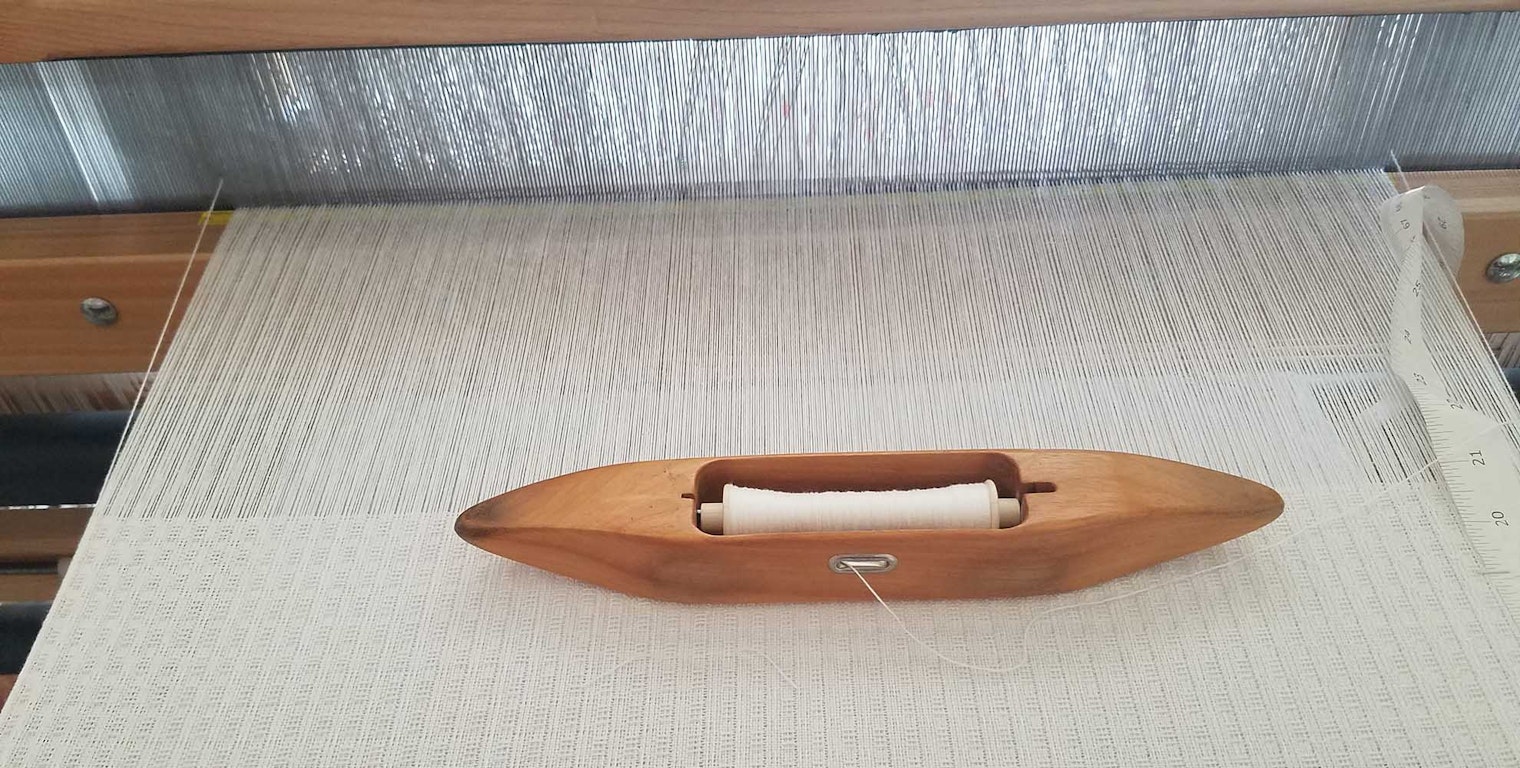
Last weekend, I finished threading and sleying the warp for my Sweet Orange Huck towels using the 15-shaft blended draft I designed based on two overshot drafts and huck lace. This week, I also registered for the Handweaver’s Guild of America’s towel exchange. I’m happy that they are still having the exchange even though Convergence was cancelled due to COVID-19. For the exchange, I need to weave 5 towels and submit them by August 31.
Threading heddles and sleying the reed are two of my favorite weaving tasks. I love how the cross keeps the ends in order and how what looks like a tangle of threads straightens out and becomes organized as they pass through the heddles and reed. As I was working, I was reminded how many of my students struggled with threading and sleying. In retrospect, I wish I had worked harder to show them how to prepare for the tasks rather than simply starting them. As in most tasks in weaving, preparation and planning make things go much smoother—probably a metaphor for life, too.
I know there are a lot of Weaving Opinions out there on all weaving topics, but here is my method. This is based on warping back-to-front and threading from right to left. Adapt it to your own warping and threading orientation.
I used this method to thread 561 ends and then sleyed them, again using my finger slots to hold them in order. I had 2 crossed ends and 1 end that didn’t quite make it through the heddle eye.
Whatever method you use to thread and sley, I encourage you to prepare for the process rather than jumping in haphazardly. It may take a bit more time in the beginning, but it will be easier and quicker in the long run.
Weave well,
Susan
More from Handwoven
From the Library







Comments
No comments yet — be the first to share your thoughts.
Sign in to join the conversation — commenting is for signed-in members.