
Loading the latest stories…
It’s been a while, but BeWeave It headquarters is back up and running again, and we couldn’t be more pleased. To kick off our new season of fun fiber facts and current events, we’re going to India to learn about the spectacular embroidery of Banjara.
Christina Garton2 min read
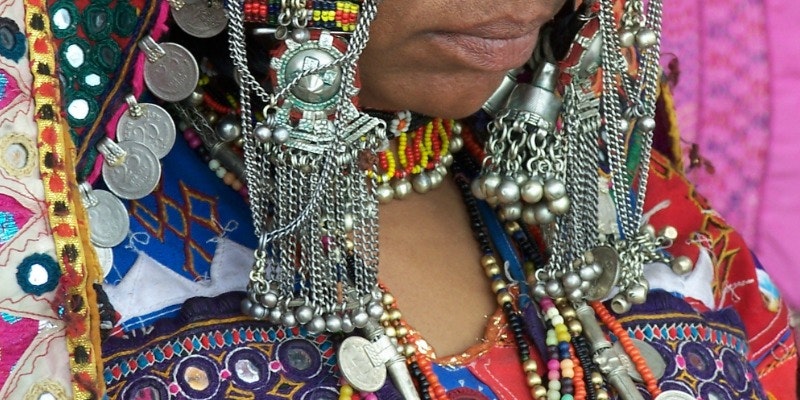
It’s been a while, but BeWeave It headquarters is back up and running again, and we couldn’t be more pleased. To kick off our new season of fun fiber facts and current events, we’re going to India to learn a bit about the spectacular embroidery of the Banjara tribe of India.
Banjaran embroidery does not boast the figured motifs found in the needlework throughout much of India. There are no flowers or carefully stitched paisley patterns, and with very few exceptions, there are no animals, either. Instead, the Banjara create elaborate designs using simple shapes and line work. Outlines of circles, rectangles, zigzags, and squares are carefully stitched onto cloth and filled in with even more stitching. In some of the more elaborate textiles produced by the Banjara, nearly every inch of the surface is covered in stitching—it is truly astounding.
Alongside the thread, one can often find small mirrors known as shisha decorating the cloth—in some cases, the face of a cloth is almost entirely covered by shisha carefully embroidered in place. The most valued of these shisha are created using a technique that dates back to Roman times where molten glass is mixed with lead and zinc before being blown into a sphere. This sphere is then broken, and the shards are carefully cut into circles, squares, and other shapes. These handmade shisha are irregular in size and often feature bubbles and an uneven texture—it is these imperfections that make the shisha especially desirable to the Banjara.
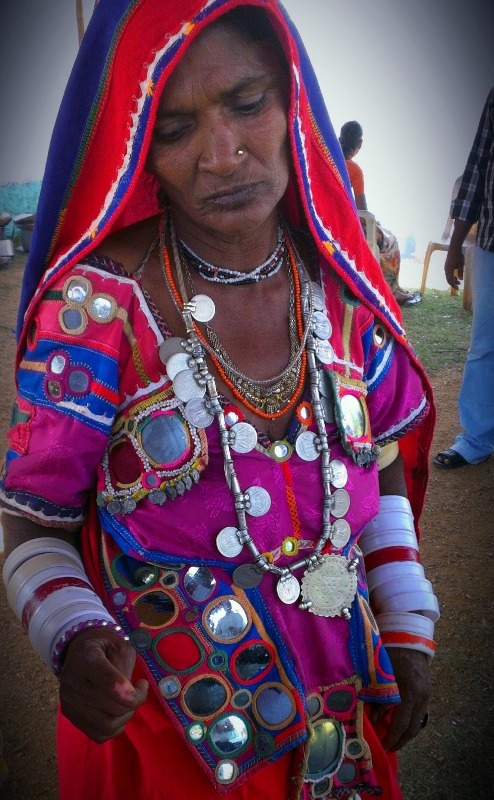
A Banjara woman in traditional dress. Notice the large swaths of fabric covered in shisha. PHOTO BY DAVID B. ENGLAND
In fact, imperfection is a theme within Banjara textiles. To the casual observer, many of the embroidered designs look beautifully symmetrical, but upon closer inspection, there are often small areas of asymmetry or where a pattern briefly changes. Perhaps there’s one shape where the outline color doesn’t quite match the rest or a checkerboard pattern where two squares of the same color sit side by side. While these might look like careless mistakes or poor planning, in reality these bits are very purposefully placed. The Banjara believe that perfect cloth encourages hubris, and hubris is punished by divine forces. (This is a belief shared by many cultures—just look at the ancient myth of Arachne and Athena.) As a result, small imperfections find their way into these beautiful embroideries, adding to the intrigue.
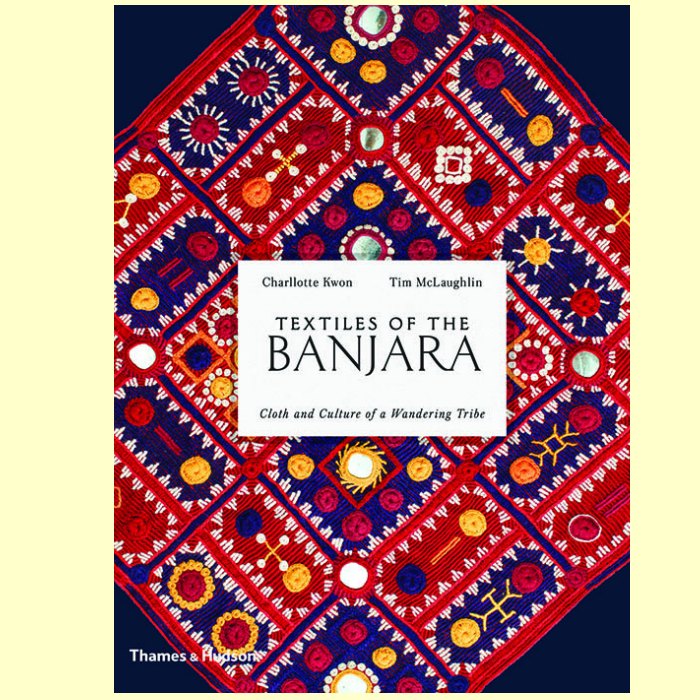
Textiles of the Banjara by Charllotte Kwon and Tim McLaughlin.
Perhaps this is a lesson all weavers and fiber workers can take to heart. Instead of lamenting over uneven selvedges or treadling errors unseen until the cloth is off the loom, think of them as ways to stay humble and, hopefully, avoid a smiting. If you’re interested in learning more about the Banjara people and their cloth, check out the book Textiles of the Banjara by Charllotte Kwon and Tim McLaughlin. You can find a review of the book in this issue of Handwoven.
Happy Weaving!
Christina
More from Handwoven
 How to Weave Other Side UpWeaving with the reverse side up by accident? The solution is in your loom type—and your tie-up.Handwoven Editors · August 5, 2026
 Books Off the Beaten Path: The Yarn Barn of Kansas List of Hidden GemsBook Club Podcast: What lesser-known treasures do Yarn Barn fiber artists love to share? Susan and Melissa share some of their favorites in weaving, spinning, and knitting. Liz Gipson drops by to talk about one of her books that Susan and Melissa adore.July 18, 2026
 Selvedge Series, Part 3: Add Commercial or Handmade Trims + Free VideoTwill tape, braids, and even fancy rickrack step up in this video tip from Spice Up Your Selvedges.Sara Bixler · July 15, 2026
 Books in Brief: Bandweaving, Tapestry, Artists at Work, and Wild BasketsFour new books with ideas to inspire handweavers.Handwoven Editors · July 13, 2026
 Understanding Brackets and RepeatsDon’t let yourself be overwhelmed by all the information that sits above a threading.Handwoven Editors · July 10, 2026
 How to Twist FringeTransform warp threads into a decorative feature with this finishing technique.Handwoven Editors · July 10, 2026
 Simple HemstitchingHemstitching creates a neat, secure edge that helps prevent your weaving from unraveling.Handwoven Editors · July 10, 2026
 Ladder and Trellis HemstitchingOnce you’ve mastered the basic hemstitch, try these decorative variations for an elegant edge.Handwoven Editors · July 10, 2026
 On Vacation? Feel Like Weaving? Find a Good Stick!Start with a walk in the woods, add a handful of thrums, and you’ll have a project to fill a lazy afternoon.Lynn Rognsvoog · July 8, 2026
 All Sorts of Warp Ends: Single, Doubled, and WorkingWhat do those words mean when it comes to heddles—and to sett?Handwoven Editors · July 6, 2026
From the Library




Comments
No comments yet — be the first to share your thoughts.
Sign in to join the conversation — commenting is for signed-in members.